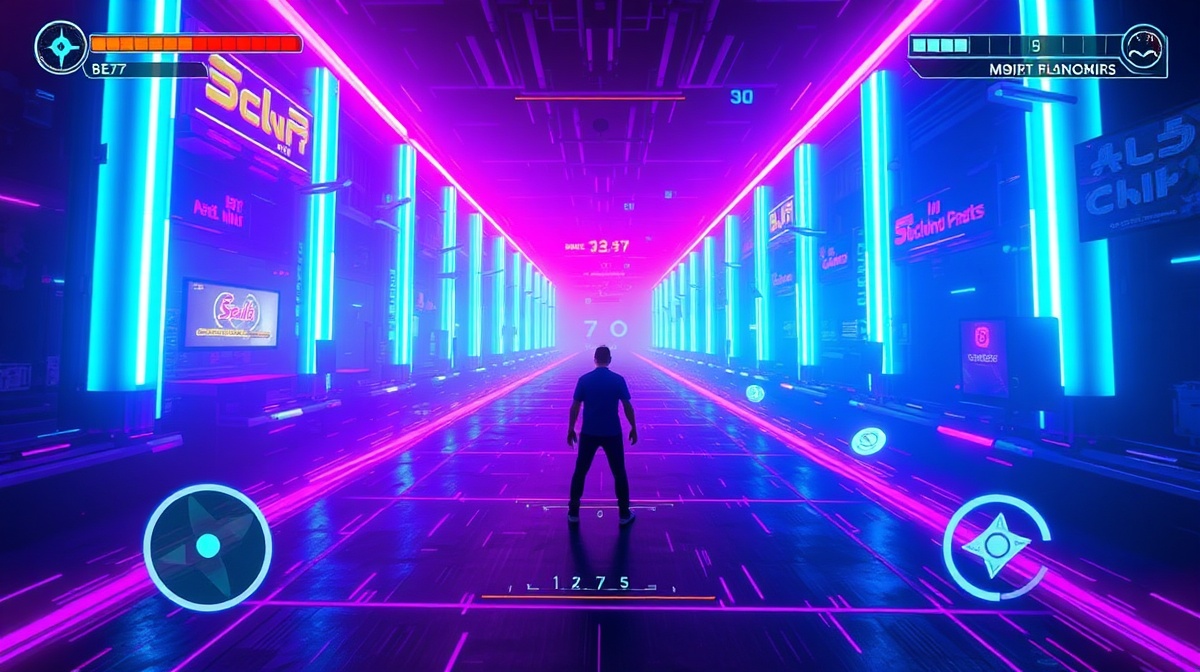
Pulse Arcade
A high-energy indie title featuring arcade mechanics with modern gameplay systems.
Overview
Pulse Arcade is a fast-paced arcade-inspired game that brings classic arcade energy into a modern context. With vibrant neon aesthetics, tight controls, and addictive gameplay loops, it delivers endless fun for players seeking high-score chasing and leaderboard competition.
My Contributions
- →
Core Gameplay Loop Design
Designed fast-paced, satisfying gameplay mechanics that keep players engaged and coming back. Focused on tight controls, snappy feedback, and skill-based progression.
- →
High-Score & Leaderboard Systems
Implemented backend systems for score tracking, leaderboards, and social competition. Integrated with cloud services for persistent player data across platforms.
- →
Neon Visual Design & Particle Effects
Created vibrant neon aesthetics with extensive particle effects, screen shake, and visual feedback that reinforce the arcade feel and make player actions feel impactful.
Design Decisions
Simple But Deep Mechanics
The core mechanic is easy to learn but difficult to master. This "easy to pick up, hard to put down" design keeps casual players engaged while rewarding hardcore players with depth and skill expression.
Constant Feedback & Juice
Every player action is met with immediate visual and audio feedback. Screen shake, particle bursts, sound cues, and UI animations create a sense of impact and make the game feel responsive and fun to play.
Social Leaderboards
Built-in leaderboard integration encourages friendly competition and social sharing. Cross-platform leaderboards create a unified community around high-score chasing.
Tools & Technology
Engine
Unity Engine 2022 LTS
Languages
C#
Services
Firebase, PlayFab
Platforms
iOS, Android, Web
Case Study: Finding the Perfect Difficulty Curve
Challenge: Initial playtesting showed that players either quit in the first 2 minutes (too hard) or lost interest after 5 minutes (too easy). The difficulty curve was broken.
Solution: We implemented a dynamic difficulty system that subtly adjusts challenge based on player performance. Additionally, we added more variety to enemy patterns and spawn mechanics to keep the challenge fresh as sessions progress.
Result: Average session length increased from 5 minutes to 25 minutes. Players reported the game was "fun at the start and stayed fun," and retention metrics improved significantly. The leaderboard also helped with replayability.