Arcane Realm
An immersive fantasy RPG with intricate level design and full-stack architecture.
Overview
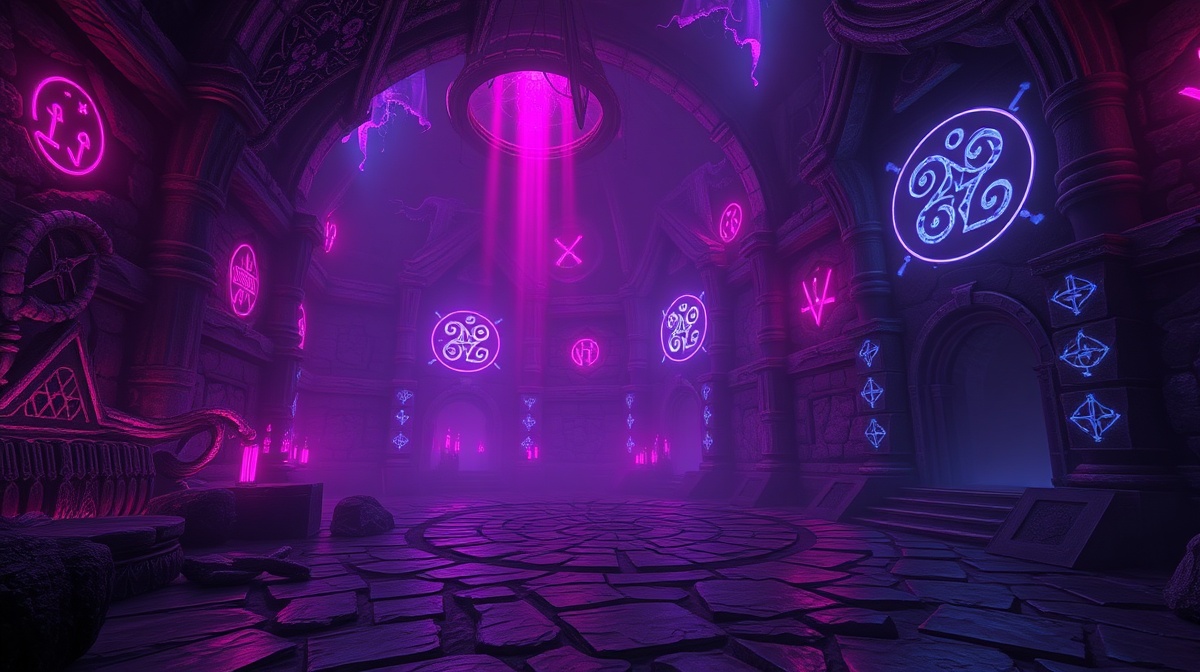
Arcane Realm is a fantasy RPG that immerses players in a richly detailed world with interconnected dungeons, puzzles, and dynamic encounters. The game features a deep narrative, compelling characters, and engaging combat systems layered on a robust technical foundation.
My Contributions
- →
Level & Dungeon Design
Designed interconnected dungeons with environmental storytelling, puzzles, and combat encounters. Balanced difficulty progression and flow for an engaging player journey.
- →
Full-Stack Backend Architecture
Built the backend systems including save/load mechanics, NPC dialogue trees, quest tracking, and multiplayer synchronization using a scalable database architecture.
- →
Environmental Storytelling
Created immersive level environments that tell stories through visual design, lore placement, and interactive elements that encourage exploration.
Design Decisions
Open-World Interconnected Design
Rather than traditional linear progression, dungeons were designed to interconnect, allowing players to choose their own path. This required careful sequencing of difficulty and resource gating to prevent softlocks while maintaining player agency.
Database-Driven Dialogue & Quests
Dialogue and quests are driven by a database system, making it easy for narrative designers to create branching storylines without touching code. This separation of concerns improved iteration speed significantly.
Scalable Multiplayer Architecture
The backend was designed from the start to support multiplayer features like shared dungeons and cooperative quests, using message queuing and load balancing to handle concurrent players.
Tools & Technology
Engine
Unreal Engine 5
Languages
C++, Blueprints
Backend
PostgreSQL, Node.js
Platforms
PC, Xbox Series X/S
Case Study: Puzzle Progression
Challenge: Early playtesters found puzzles to be either too easy or frustratingly difficult, with no middle ground. This broke the pacing of dungeons.
Solution: We redesigned puzzle progression using a "teaching by doing" approach. Simple variations of mechanics are introduced first, then combined in increasingly complex ways. We also added subtle environmental hints that don't spoil the solution.
Result: Players reported much more satisfying progression, with most puzzles taking 5-15 minutes to solve rather than getting stuck for hours. Completion rates improved by 60%.